On the shelf, all olive oils look alike: similar bottles, very different prices. So how can you tell what you are buying?
We are small producers in Valderice, Sicily, and we are asked this often. Here is a four-step guide: label, acidity and peroxides, tasting, defects. At the end, some tips on storage.
1. Read the label
The rules for marketing olive oil in the European Union are set out in Delegated Regulation (EU) 2022/2104. Here is what to look for.
The category
There are several categories of olive oil. The highest is “extra virgin olive oil”: oil obtained from olives solely by mechanical means, with no defects on tasting and precise chemical parameters. Wording such as “olive oil composed of refined olive oils and virgin olive oils” describes a different product, partly refined.
Origin
For extra virgin and virgin oils, the origin must appear on the label. Under the regulation, origin is where the olives were harvested and where the mill that extracted the oil is located. If these are in different countries, the label must say so. A generic phrase such as “blend of olive oils of EU origin” tells you much less than a precise origin.
Harvest year
The harvest year is optional. It may only be stated if 100% of the oil in the bottle comes from that harvest, either as a season (for example 2026/2027) or as the month and year of extraction. For an oil meant to be enjoyed fresh, it is valuable information.
Best-before date and storage
The bottle also shows a best-before date. The regulation does not set a fixed shelf life: the producer chooses it, so it is worth reading it together with the harvest year. Storage instructions are mandatory too: away from light and heat.
Optional terms
“Cold extraction” is reserved for oils obtained below 27 °C by percolation or centrifugation. “First cold pressing” only applies to oil obtained with a traditional hydraulic press, also below 27 °C. Terms such as “fruity”, “bitter” or “pungent” are regulated as well: they may only appear on the label if a recognised tasting panel has certified them.
2. Acidity and peroxides, simply explained
These are two laboratory values that tell you about the condition of the oil and of the olives it came from.
Acidity
Acidity is not a taste: you cannot feel it in the mouth. It is the amount of free fatty acids, expressed as a percentage of oleic acid. When olives are bruised, diseased, picked from the ground or left waiting too long before milling, part of their fats break down and acidity rises.
For extra virgin olive oil the legal limit is 0.8%. The lower the value, the healthier the olives and the faster they were processed. Our oil has an acidity of 0.2%.
Peroxides
The peroxide value measures the early oxidation of the oil. For extra virgin olive oil the limit is 20 milliequivalents of oxygen per kilo. A low value means the oil has been handled and stored well. The regulation also sets other laboratory parameters, such as UV absorbance and ethyl esters.
Note: low acidity is necessary but not enough on its own. An oil can have perfect numbers and still show a defect on tasting, in which case it is not extra virgin.
3. Taste it: fruitiness, bitterness and pepperiness are qualities
By law, an oil is extra virgin only if a panel of trained tasters, using the International Olive Council method, finds zero defects and a perceptible fruitiness.
At home: pour a spoonful into a small glass, warm it in your palm, cover it for a few seconds, then smell and taste.
- Fruitiness. The aromas of healthy, fresh olives. Green fruitiness recalls grass, leaves, artichoke and green tomato; ripe fruitiness has softer, sweeter notes.
- Bitterness. Felt on the tongue, typical of oils from green or just-ripening olives.
- Pepperiness. A tingle in the throat, sometimes with a cough, typical of early-season oils.
Bitterness and pepperiness come from the olive’s natural polyphenols and are not defects: they are the sign of a fresh oil.
4. The most common defects
An oil with even one perceptible defect cannot be sold as extra virgin. Here are the most frequent ones.
Rancid
The defect of old or badly stored oil that has oxidised. It recalls stale nuts or old butter.
Fusty / muddy sediment
Caused by olives piled up and left to ferment before milling, or by oil left in contact with the sludge at the bottom of tanks. It recalls spoiled brined olives.
Musty, humid, earthy
Develops when olives stay for days in damp conditions and grow moulds, or are picked dirty with soil and not washed. It recalls a damp cellar.
Other defects
The International Olive Council also describes winey-vinegary, from fermentation, and frostbitten olives, with a smell of wet wood.
5. Store it well at home
- Choose dark glass bottles or tins, which protect the oil from light.
- Keep it cool and dark, away from the oven and hob.
- Always close the cap: air oxidises the oil.
- Use it within a few months of opening and check the harvest year when you buy.
Our oil, put to the test
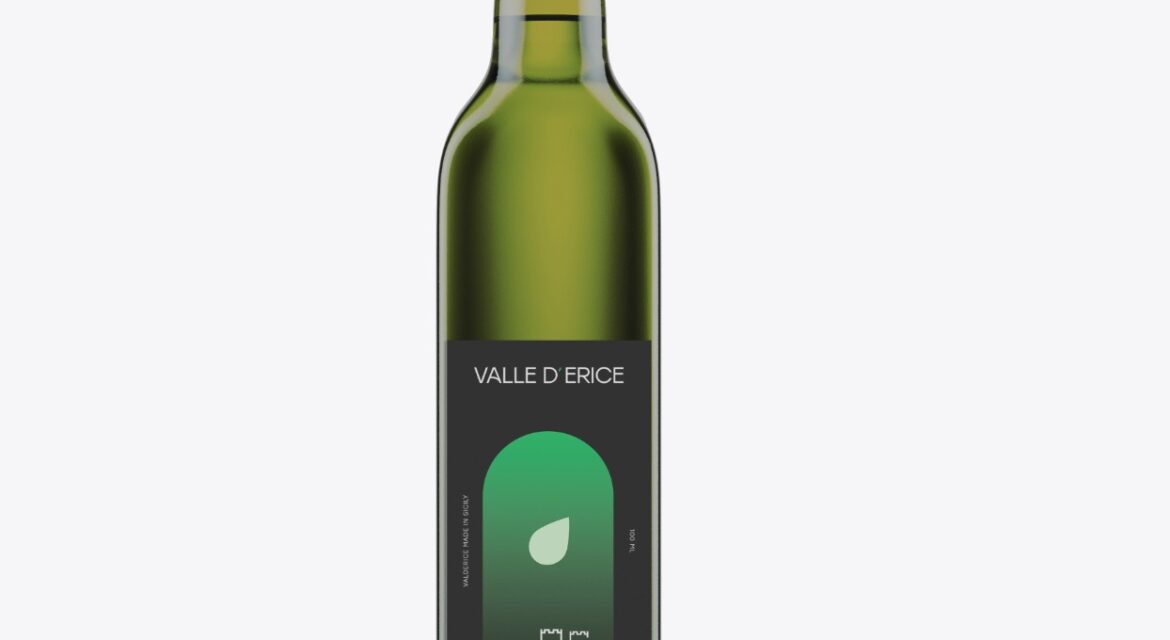
We love it when someone tastes our oil with this guide in hand. We make it in Contrada Fico, Valderice, from hand-picked Biancolilla and Nocellara, cold extracted and unfiltered. Just water, soil and sun. Find out more on our About us page.
Sources
- Commission Delegated Regulation (EU) 2022/2104 on marketing standards for olive oil: EUR-Lex
- International Olive Council, COI/T.20/Doc. No 15/Rev. 11 (2024), sensory analysis of virgin olive oils