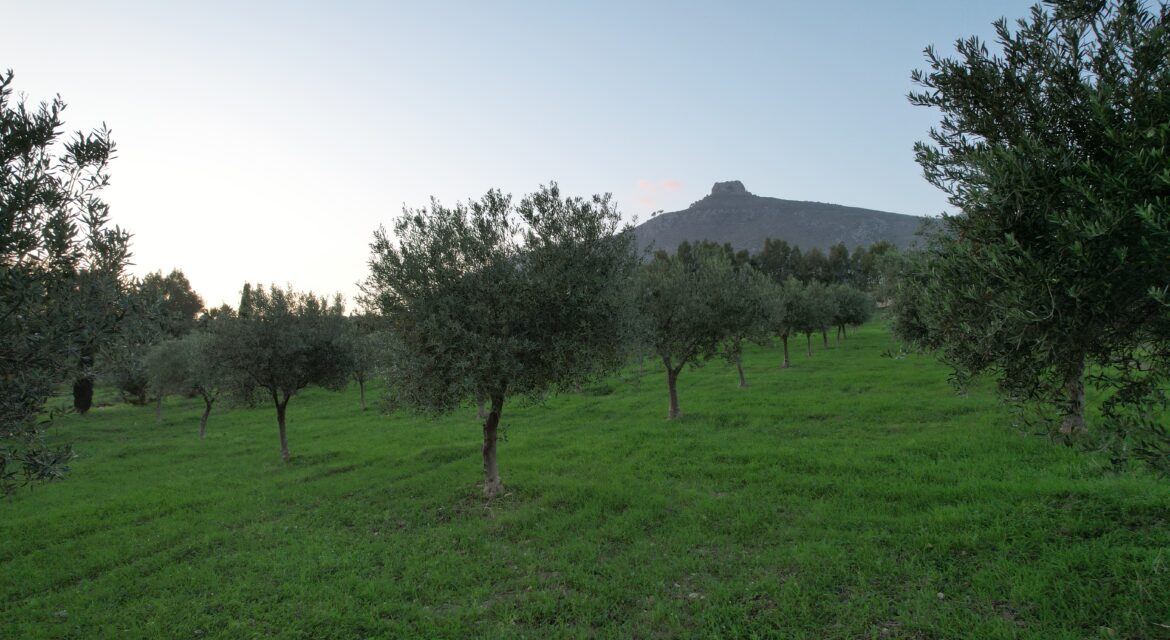
On our three hectares in Contrada Fico, below Mount Erice, two olive varieties grow side by side: Biancolilla and Nocellara. They are two historic Sicilian cultivars with two different characters, and our oil is born from their meeting.
Biancolilla: the gentle one
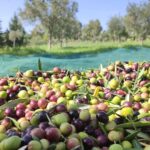
Biancolilla is one of the oldest cultivars in Sicily. Its name comes from the colour of the olives as they ripen: they start a very pale, almost white green (“bianco”) and turn a purplish red (“lilla”).
It adapts well to the Sicilian climate. A study by the University of Palermo found it more tolerant of heat and drought than other island varieties such as Nocellara del Belice. It is also self-fertile, which is why it is often planted next to Nocellara, which needs pollinators.
Flavour profile
Biancolilla oil is usually the gentler of the two. It has a light to medium fruitiness, with aromas of fresh grass, tomato and almond, sometimes artichoke. Bitterness and pepperiness are present but restrained. It is soft and balanced, and it accompanies food without covering it.
Nocellara: structure and character
In Sicily, “Nocellara” usually means Nocellara del Belice, grown for a long time in the Belice valley between the provinces of Trapani and Agrigento. The International Olive Council’s world catalogue classifies it as dual-purpose: good for oil and excellent as a table olive. The olives are large, with firm, crunchy flesh.
It ripens late and its oil is rich in oleic acid. Nocellara del Belice is one of the main varieties of the Valli Trapanesi PDO, together with Cerasuola.
Flavour profile
Nocellara oil usually has a medium green fruitiness, with typical notes of green tomato, cut grass and artichoke. Compared with Biancolilla it gives more body and a firmer finish, with clear bitterness and pepperiness in the new oil.
Why we grow them together
Growing these two varieties together makes sense first in the grove: Biancolilla helps pollinate Nocellara. Then it makes sense in the glass: Biancolilla brings finesse and softness, Nocellara structure and green aromas.
Our trees are vase-pruned and naturally fertilised, without synthetic chemicals. We pick by hand, extract cold and do not filter the oil. Just water, soil and sun: the two cultivars do the rest.
In the kitchen: four dishes from Trapani
Busiate with pesto alla trapanese
Trapani pesto is made with fresh tomato, almonds, basil, garlic, pecorino and extra virgin olive oil, pounded together, and served with busiate, the local twisted pasta. Add the oil raw, at the end, without heating it.
Fish couscous
Trapani couscous is made by rolling semolina by hand with a little oil, steaming it and soaking it in a fragrant fish broth. A drizzle of raw oil before serving brings back the fresh aromas.
Caponata
In caponata, fried aubergines meet celery, onion, olives, capers and the sweet-and-sour of vinegar and sugar. It needs an oil with structure: Nocellara’s bitterness and pepper balance the sweet and sour.
Pane cunzato
Pane cunzato, “dressed bread”, is the simplest dish and the best test for an oil: warm country bread, plenty of extra virgin olive oil, oregano, salt, tomato, anchovies and cheese. Use new oil, raw and generously.
Taste the two souls of our oil
The best way to get to know Biancolilla and Nocellara is to taste them in our oil, perhaps on a slice of pane cunzato. Read about us and how we work on our About us page.
Sources
- International Olive Council, World Catalogue of Olive Varieties: Nocellara del Belice
- OLEA Databank, Biancolilla
- University of Palermo, study on heat and drought tolerance